
Vision is one of the most essential senses, and when cataracts or refractive errors interfere with clarity, intraocular lenses (IOLs) become a life-changing solution. Whether used in cataract surgery or refractive lens exchange (RLE), IOLs replace the natural lens of the eye to restore sharp and focused vision. As technology advances, the options for IOLs have expanded, giving patients customised solutions based on lifestyle, age, visual goals, and eye health. If you're planning for cataract surgery or exploring refractive correction alternatives beyond spectacles and contact lenses, understanding the types of IOLs is critical. In this blog, we break down the most widely used intraocular lenses, their benefits, and who they are best suited for.
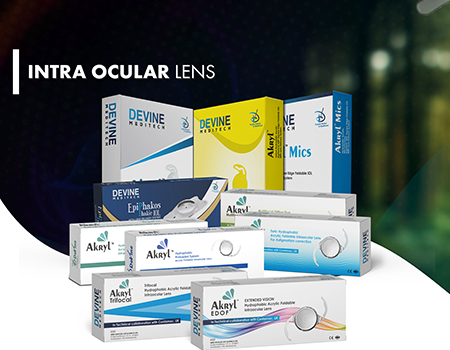
Monofocal IOLs are the most commonly implanted lenses and are often included in standard cataract surgery procedures. These lenses are designed to provide clear vision at a single focal point, typically distance vision. Patients may still require reading glasses or intermediate correction after surgery.
Best For:
Patients who want sharp distance vision
Individuals comfortable using glasses for reading or computer work
Those with budget or insurance-based limitations
Benefits:
• Reliable and widely used
• Produces excellent clarity for one distance
• Minimal glare or halos
Multifocal IOLs are advanced lenses that allow the patient to see clearly at multiple distances near, intermediate, and far reducing the dependency on glasses. These lenses use different optical power zones to manage focus at different ranges.
Best For:
People who want maximum independence from spectacles
Active individuals reading, driving, and using digital devices frequently
Benefits:
• Clear vision across multiple distances
• Minimal or no need for reading glasses
Considerations:
Some patients may experience glare or halos, especially at night, which typically reduces over time.
Toric IOLs are specifically designed to correct astigmatism. Astigmatism arises when the cornea has an irregular shape, causing blurred vision. Toric lenses provide crystal-clear vision for distance and significantly reduce the need for glasses after surgery.
Best For:
Patients with moderate to high astigmatism
Those wanting sharper distance vision without relying heavily on corrective eyewear
Benefits:
• Corrects astigmatism effectively
• Stable lens positioning ensures long-term clarity
EDOF IOLs use advanced optics to create a continuous range of vision from distance to intermediate, making tasks such as driving, working on the computer, or watching television easier. While near vision may not be as sharp as multifocal lenses, many patients experience minimal spectacle dependence.
Best For:
Professionals using laptops or screens frequently
Individuals wanting a broader range of focus with fewer visual disturbances
Benefits:
• Reduced glare and halos compared to multifocal IOLs
• Better intermediate vision performance
Accommodating IOLs mimic the natural eye lens by moving or changing shape to adjust focus. Through eye muscle movement, they provide improved near and intermediate vision while maintaining clear distance sight.
Best For:
Individuals who want natural focusing ability
Active patients with dynamic visual needs
Benefits:
• Natural focusing mechanism
• Reduced need for reading glasses
Unlike traditional lenses used during cataract surgery, phakic IOLs are implanted without removing the natural lens. These lenses are ideal for individuals with high refractive errors who are not suitable for LASIK or PRK. They are placed in front or behind the iris to correct myopia, hyperopia, or astigmatism.
Best For:
Young patients (usually 18–45 years)
High refractive error patients not eligible for laser correction
Benefits:
• Preserves the natural lens
• Offers high-definition clarity
• Ideal for severe myopia
Intraocular lenses have evolved significantly, offering patients multiple options to restore, enhance, and personalise their vision. From basic monofocal lenses to advanced phakic and multifocal lenses, today’s technology enables improved clarity, comfort, and visual independence. Understanding each lens type empowers patients to make confident, informed decisions. With expert guidance and the right IOL selection, clear vision isn’t just restored it’s reimagined.